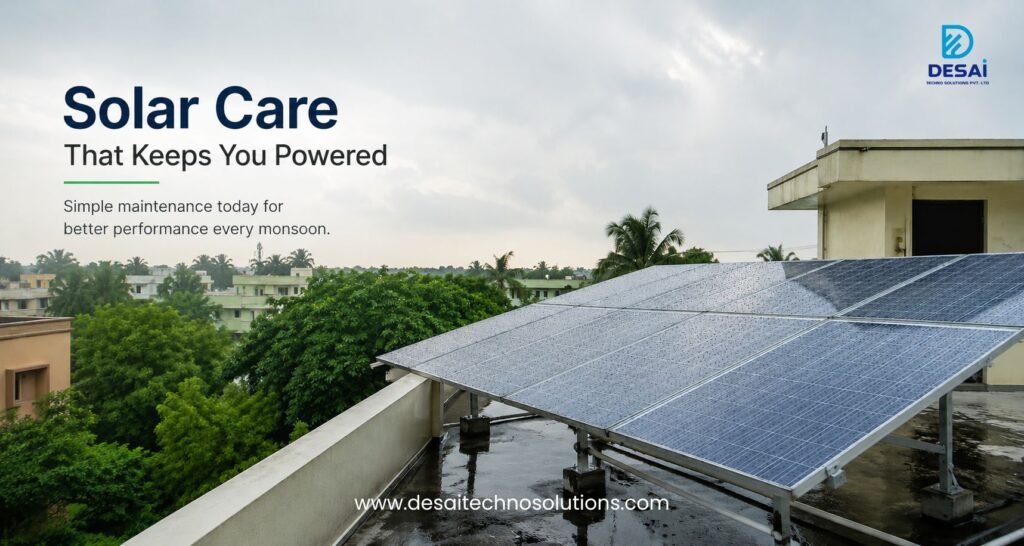
The monsoon season brings much-needed relief from the summer heat, but it also raises questions among solar system owners. One of the most common concerns is whether rooftop solar systems can continue to perform efficiently during cloudy and rainy weather.
The good news is that solar panels do work during the monsoon. Modern solar technology can generate electricity even when the sky is overcast. However, like any outdoor system, rooftop solar installations benefit from proper care and regular maintenance during the rainy season.
In this blog, we’ll share simple, practical rooftop solar maintenance tips to improve performance, ensure safety, and keep your system running efficiently throughout the monsoon.
Does Rooftop Solar Work During the Monsoon?
During the monsoon, rooftop solar systems definitely continue to produce electricity. Although energy production may be lower than on bright summer days, solar panels can still capture diffuse sunlight passing through the clouds.
In fact, occasional rain can be beneficial. Rainwater helps wash away dust and dirt that accumulate on the panels during the dry season. However, continuous rainfall, high humidity, and debris from nearby trees can reduce your system’s overall efficiency if it is not properly maintained.
This is why regular inspections and basic care become important during the monsoon months.
Why Monsoon Maintenance Matters
Your rooftop solar system is designed to withstand different weather conditions, including rain and wind. However, prolonged exposure to moisture and seasonal debris can create issues that may affect performance over time.
Proper maintenance helps:
- Ensure consistent energy generation
- Improve system safety
- Identify minor issues before they become expensive repairs
- Extend the lifespan of solar panels and electrical components
- Maximise the long-term return on your solar investment
Whether you have a residential or commercial solar installation, a few preventive measures can make a significant difference.
Simple Rooftop Solar Maintenance Tips During the Monsoon
1. Inspect the Solar Panels for Dirt and Debris
While rain helps clean solar panels, it may not remove everything. Leaves, bird droppings, branches, and accumulated dirt can still block sunlight from reaching the solar cells.
After heavy rain or storms, visually inspect your panels from a safe distance. If you notice significant dirt buildup, schedule professional cleaning instead of attempting risky rooftop cleaning yourself.
Clean panels receive better sunlight and can maintain higher energy generation.
2. Monitor Your Solar System’s Performance
Many modern solar systems come with monitoring applications that allow you to track electricity generation in real time.
Pay attention to:
- Sudden drops in power generation
- Irregular energy production patterns
- System error notifications
- Unexpected inverter shutdowns
A slight reduction in generation during cloudy days is normal. However, a significant, prolonged decline could indicate a technical issue that requires professional attention.
Regular monitoring helps identify problems early and prevents unnecessary downtime.
3. Check for Water Accumulation Around the Installation
Proper drainage is essential during the monsoon. Water should not accumulate near electrical components, cable routes, or mounting structures.
Standing water can increase the risk of:
- Moisture damage
- Corrosion of components
- Electrical faults
- Structural issues over time
A professional inspection can ensure that drainage systems and mounting structures remain secure and safe during heavy rainfall.
4. Inspect Cables and Electrical Connections
Monsoon conditions can expose electrical systems to increased humidity and moisture.
Look for visible signs such as:
- Loose cables
- Damaged insulation
- Exposed wires
- Unusual sounds from electrical equipment
Never touch electrical components if you suspect any damage. Contact experienced professionals who can safely inspect and address the issue.
This is where reliable solar maintenance services are especially valuable for keeping your system safe and efficient.
5. Keep the Area Around the Panels Clear
Trees and plants grow rapidly during the rainy season. Overhanging branches can cast shadows on solar panels, reducing energy generation.
Additionally, falling leaves and branches can accumulate on the panels, blocking sunlight.
Regularly trimming nearby vegetation helps:
- Minimise shading losses
- Reduce debris accumulation
- Lower the risk of physical damage during storms
A clear rooftop environment allows your solar system to perform more efficiently throughout the season.
6. Inspect the Mounting Structure
Solar panel mounting structures are designed to handle different weather conditions, including rain and wind. However, periodic inspections are still recommended.
Strong winds and heavy rain can occasionally cause loose bolts or damage to mounting components.
A professional inspection can verify:
- Structural stability
- Secure panel fastening
- Proper alignment of panels
- Signs of rust or corrosion
Maintaining a sturdy mounting structure ensures the long-term safety and performance of your rooftop solar system.
7. Schedule Professional Maintenance
Routine professional maintenance can help identify issues that may not be visible during a basic inspection.
Professional technicians typically inspect:
- Solar panel condition
- Electrical wiring
- Inverter performance
- Earthing systems
- Mounting structures
- System efficiency
Periodic servicing helps maintain optimal performance and reduces the risk of unexpected breakdowns.
Common Mistakes to Avoid During the Monsoon
Many solar system owners unintentionally make mistakes that may affect safety and performance.
Avoid these practices:
- Cleaning panels during heavy rain: Wet rooftops can be slippery and dangerous.
- Using harsh cleaning chemicals: Strong chemicals may damage panel surfaces.
- Ignoring warning signs: Unusual performance drops should be inspected promptly.
- Attempting electrical repairs yourself: Solar systems involve electrical components that should only be handled by trained professionals.
Simple precautions can help protect both your solar system and your personal safety.
Why Choosing the Right Solar Partner Matters
Quality installation and ongoing support play an important role in the long-term performance of any solar system.
Working with an experienced rooftop solar company ensures that your system is installed to industry standards and properly maintained over time.
A reliable solar partner can provide:
- Professional inspections
- Preventive maintenance services
- Technical support
- Performance monitoring assistance
- Long-term system care
When selecting a service provider, choose a company with proven experience in installation and maintenance.
If you are looking for a trusted solar company in Kolhapur Maharashtra, partnering with an experienced team can help ensure your rooftop solar system continues to deliver reliable performance year after year.
An experienced EPC solar company can manage every stage of your solar journey, from system design and installation to maintenance and after-sales support.
Conclusion
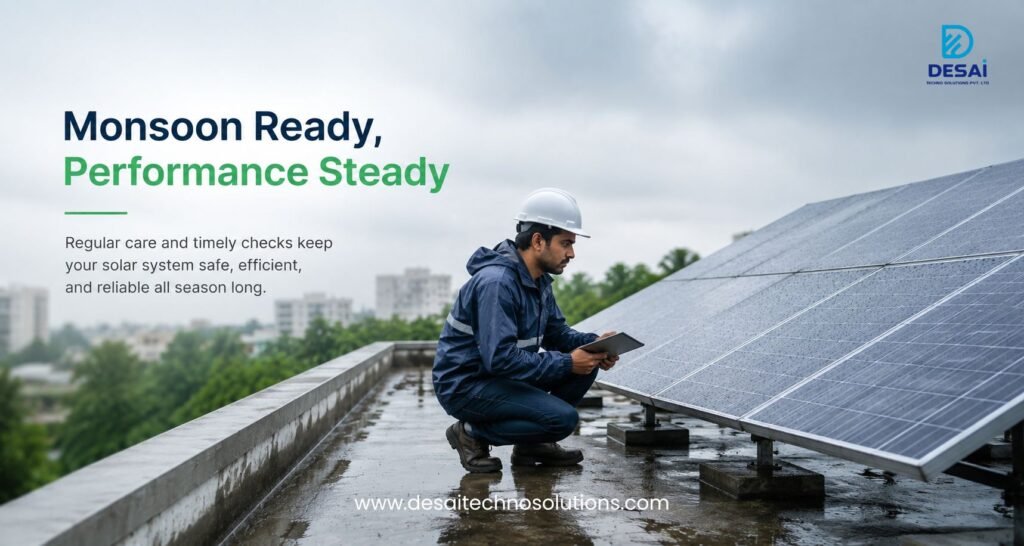
The monsoon season does not stop your rooftop solar system from generating electricity. With proper care and regular inspections, your system can continue delivering clean energy and long-term savings even during cloudy and rainy months.
Simple steps such as monitoring performance, keeping panels clear of debris, checking drainage, and scheduling periodic inspections can go a long way in maintaining efficiency and system safety.
At Desai Techno Solutions, we provide end-to-end solar solutions and professional solar maintenance services to help homeowners and businesses maximise their systems’ performance year-round.
A little maintenance today can help ensure your rooftop solar system continues to power your home or business efficiently for many monsoons to come.
Planning a rooftop solar installation?
Connect with Desai Techno Solutions today and take the first step toward smart energy savings