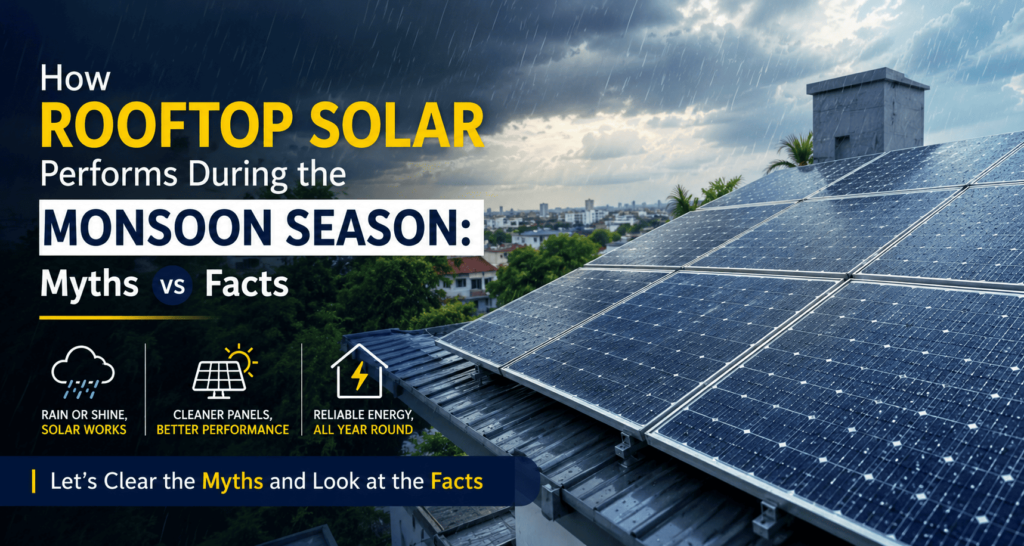
As more homeowners and businesses switch to solar energy, one question keeps coming up every year when the rainy season approaches: Does rooftop solar work effectively during the monsoon?
Many people assume that solar panels stop generating electricity when the sky is cloudy or when it rains continuously. These misconceptions often prevent property owners from considering solar energy as a long-term investment.
The truth is that modern solar systems are designed to perform efficiently year-round, including during the monsoon season. While solar production may be lower compared to bright summer days, a properly designed system can still generate significant electricity even under cloudy conditions.
In this blog, we will separate common myths from facts and explain how rooftop solar performs during the rainy season.
Understanding How Solar Panels Generate Electricity
Before discussing monsoon performance, it’s important to understand how solar panels work.
Solar panels generate electricity using sunlight, not heat. Even when the weather is cloudy, sunlight still reaches the Earth’s surface. Modern solar panels can capture this diffused sunlight and convert it into usable electricity.
This means that solar panels do not need direct sunshine all day to produce power. They can continue generating energy during cloudy weather, although at a reduced efficiency level.
A professional rooftop solar company designs systems by considering seasonal weather patterns, ensuring reliable annual performance rather than focusing on only a few sunny months.
Myth 1: Solar Panels Stop Working During the Monsoon
Fact: Solar Panels Continue Generating Electricity
One of the biggest misconceptions about solar energy is that panels stop working when it rains.
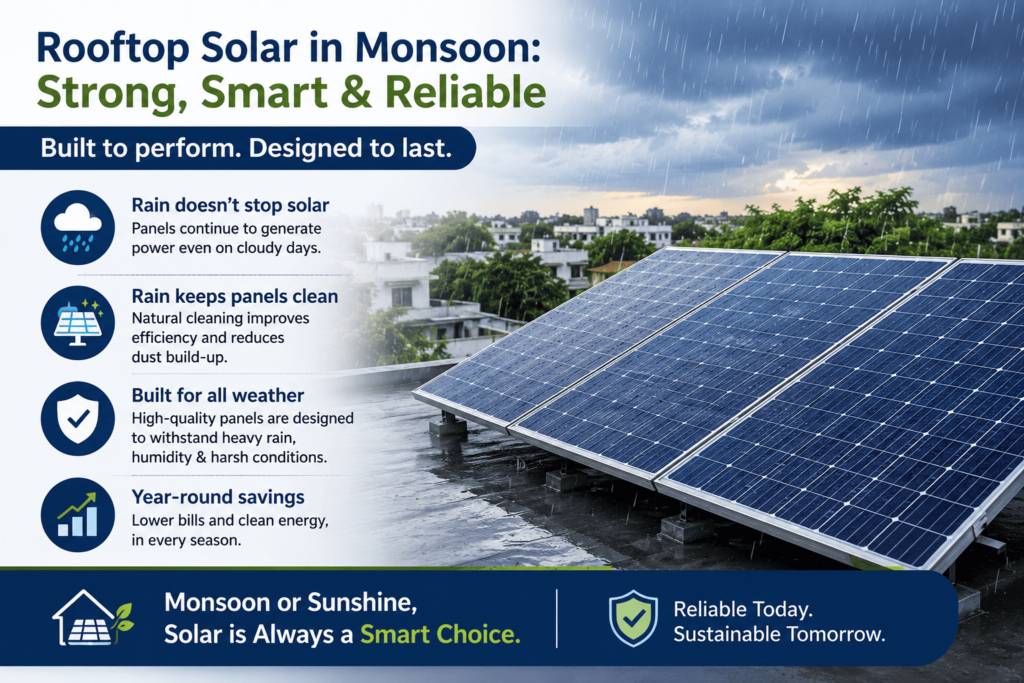
In reality, solar panels continue to generate electricity during cloudy and rainy weather. Although energy production decreases compared to clear sunny days, it does not drop to zero.
Depending on cloud cover, solar panels may still produce 10% to 50% of their normal output. Since monsoon conditions vary throughout the day, periods of brighter weather can significantly improve production.
A reliable residential rooftop solar company will analyze your location’s weather conditions before recommending the appropriate system size, ensuring optimal annual energy generation.
Myth 2: Rain Damages Solar Panels
Fact: Solar Panels Are Built for Outdoor Conditions
Many homeowners worry that continuous rainfall could damage solar panels. Modern solar panels are specifically engineered to withstand harsh environmental conditions, including:
- Heavy rainfall
- High humidity
- Strong winds
- Dust storms
- Temperature fluctuations
Panels undergo extensive testing before being approved for installation. Their tempered glass surface and durable frame protect the internal solar cells from moisture and weather-related damage.
When installed correctly by experienced professionals providing quality rooftop solar installation, solar panels can continue operating efficiently for 25 years or more.
Myth 3: Solar Panels Require Frequent Cleaning During Monsoon
Fact: Rain Often Helps Clean Solar Panels
Dust accumulation can reduce solar panel efficiency over time. Interestingly, monsoon rains can actually benefit solar panel performance.
Rainwater naturally washes away:
- Dust
- Dirt
- Bird droppings
- Airborne pollutants
This natural cleaning process helps maintain panel efficiency and reduces maintenance requirements.
However, in some cases, leaves, mud, or debris may collect around the panels. Periodic inspections remain important to ensure optimal performance.
Professional rooftop solar services often include system inspections and maintenance support to keep your solar system operating at its best throughout the year.
Myth 4: Monsoon Makes Solar Investment Unprofitable
Fact: Annual Performance Matters More Than Seasonal Performance
Some people focus only on solar production during the rainy season and conclude that solar is not worth the investment.
This is a misunderstanding.
Solar systems are designed based on annual energy generation. During summer and winter months, solar panels often generate more electricity than required, helping offset lower production during monsoon months.
The overall yearly electricity savings remain significant.
A trusted rooftop solar company in Kolhapur Maharashtra, understands local weather patterns and designs systems that maximize annual energy output rather than seasonal performance alone.
When evaluating solar energy, it is important to consider total yearly production instead of focusing on a few weeks of rainy weather.
Myth 5: Battery Backup Is Mandatory During Monsoon
Fact: It Depends on Your Energy Needs
Many people believe that batteries are essential for solar systems during the rainy season.
The reality depends on the type of system installed.
1. On-Grid Solar Systems
These systems remain connected to the electricity grid. If solar production decreases during cloudy weather, electricity is automatically drawn from the grid.
2. Hybrid Solar Systems
These systems combine solar generation with battery storage, offering backup power during outages.
3. Off-Grid Solar Systems
These systems rely entirely on solar panels and batteries without grid support.
For most residential users, on-grid systems remain highly effective even during monsoon conditions. A trusted residential rooftop solar company can help determine the best solution based on your electricity usage and backup requirements.
Benefits of Rooftop Solar During the Monsoon
Despite common misconceptions, rooftop solar offers several advantages during the rainy season.
- Cooler Temperatures Improve Efficiency
Many people are surprised to learn that solar panels often perform better in cooler temperatures. Extremely high temperatures can slightly reduce panel efficiency. During monsoon months, cooler weather can partially offset the impact of reduced sunlight. - Reduced Dust Accumulation
Regular rainfall naturally cleans panel surfaces, helping maintain energy generation. - Lower Electricity Bills Year-Round
Even with seasonal fluctuations, rooftop solar continues to reduce dependence on conventional electricity, resulting in long-term savings. - Sustainable Energy Production
Solar power remains one of the cleanest and most environmentally friendly energy sources available, regardless of season.
Tips to Maximize Solar Performance During Monsoon
To get the best results from your solar system during the rainy season, consider the following recommendations:
1. Schedule Periodic Inspections
Check for debris, loose wiring, or water drainage issues around the installation area.
2. Monitor System Performance
Most modern solar systems include monitoring applications that allow users to track daily energy generation.
3. Trim Nearby Trees
Overgrown branches can create additional shading during cloudy conditions, reducing solar output.
4. Work with Experienced Professionals
Proper design and installation play a major role in long-term solar performance.
Choosing a reputable provider for rooftop solar installation ensures your system is optimized for local climate conditions.
Why Choose Desai Techno Solutions?
When investing in solar energy, selecting the right installation partner is just as important as choosing the right equipment.
Desai Techno Solutions has established itself as a trusted provider of solar energy solutions by focusing on quality, performance, and customer satisfaction.
Whether you are looking for a residential or commercial solar solution, the team provides comprehensive rooftop solar services, including:
- Site assessment
- System design
- Professional installation
- Performance optimization
- Maintenance support
As a leading rooftop solar company in Kolhapur, Maharashtra, Desai Techno Solutions helps customers make informed decisions and maximize the long-term benefits of solar energy.
Conclusion
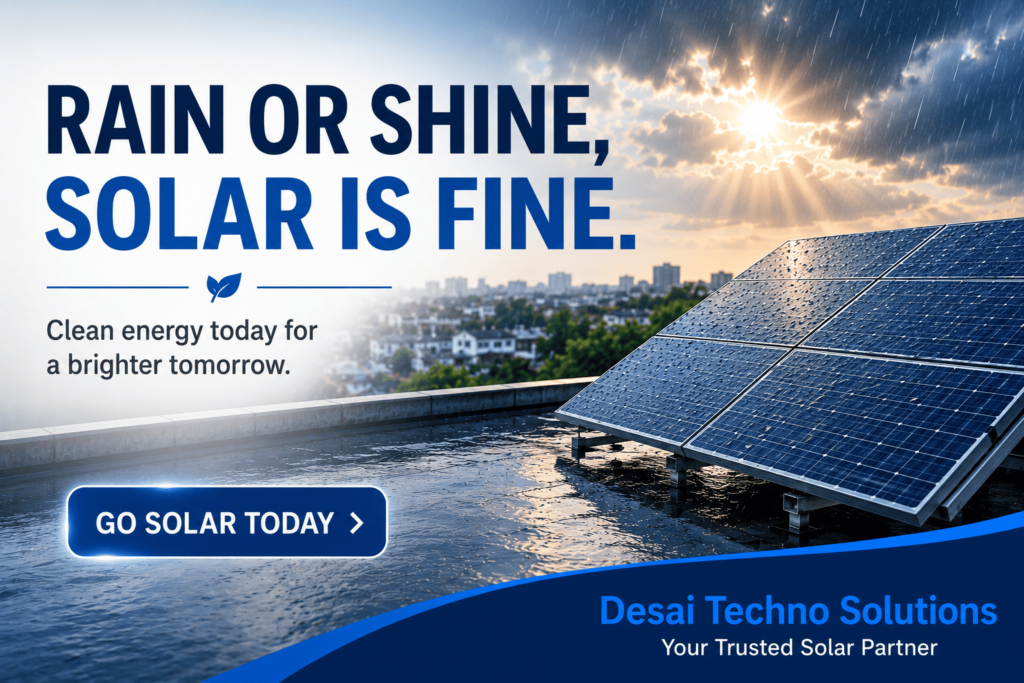
Monsoon season does not stop rooftop solar from performing effectively. While energy generation may be slightly lower during periods of heavy cloud cover, modern solar panels continue to produce electricity and deliver long-term savings throughout the year. In fact, solar systems are designed to account for seasonal weather changes, ensuring reliable annual performance.
The myths surrounding rooftop solar during the rainy season often create unnecessary doubts, but the facts clearly show that solar remains a smart, sustainable, and cost-effective investment for homes and businesses alike.
If you’re considering switching to solar, now is the perfect time to explore your options. At Desai Techno Solutions, we provide expert rooftop solar installation and complete rooftop solar services tailored to your energy needs. Contact us today to learn how a professionally designed solar system can help you reduce electricity bills, increase energy independence, and enjoy clean energy in every season.
Planning a rooftop solar installation?
Connect with Desai Techno Solutions today and take the first step toward smart energy savings